Consumer demand and fast-moving trends are inherently volatile. Relying strictly on historical data to forecast future demand is fundamentally flawed, particularly for new product launches or granular feature sets.
To stay competitive, modern retail and supply chains must pivot from reactive, rearview-mirror forecasting to proactive trend exploitation.
The Mechanics of Trend Exploitation
True trend exploitation requires identifying the precise origin and defining characteristics of a market shift. By understanding exactly what drives a trend, brands can architect their product lifecycles to ride the momentum rather than chase it.
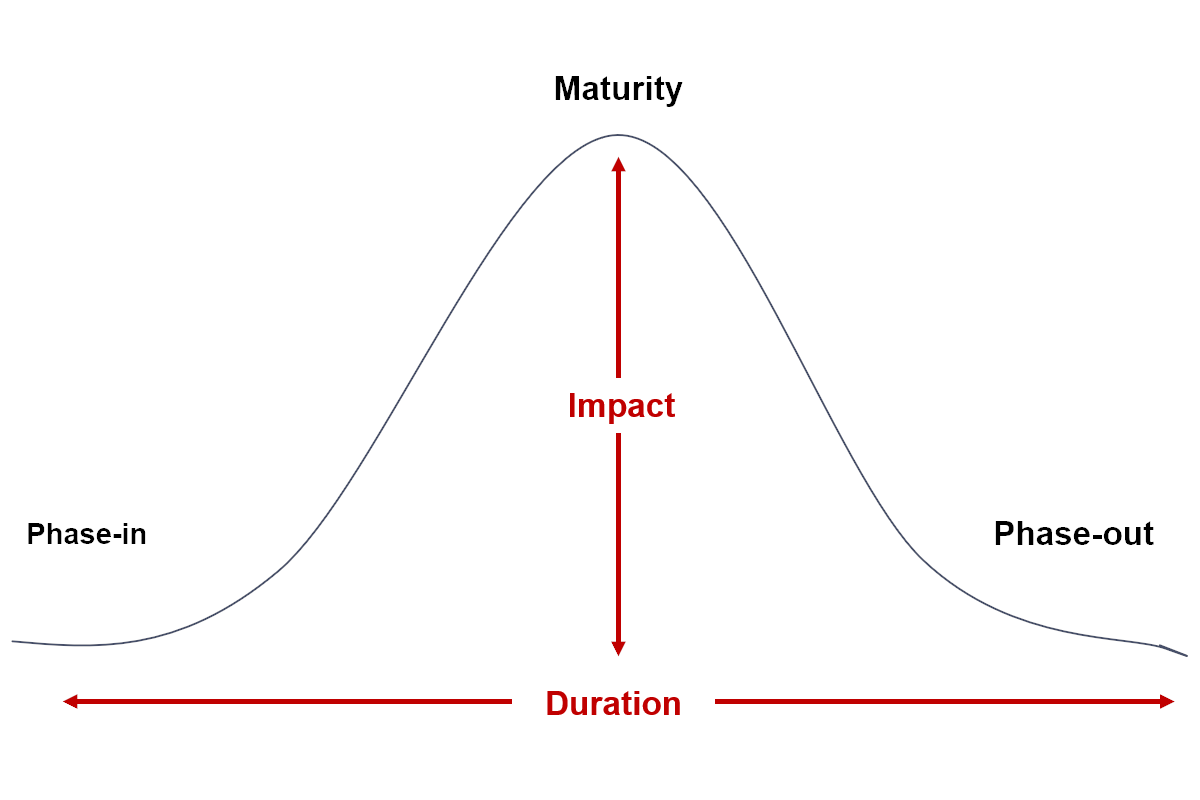
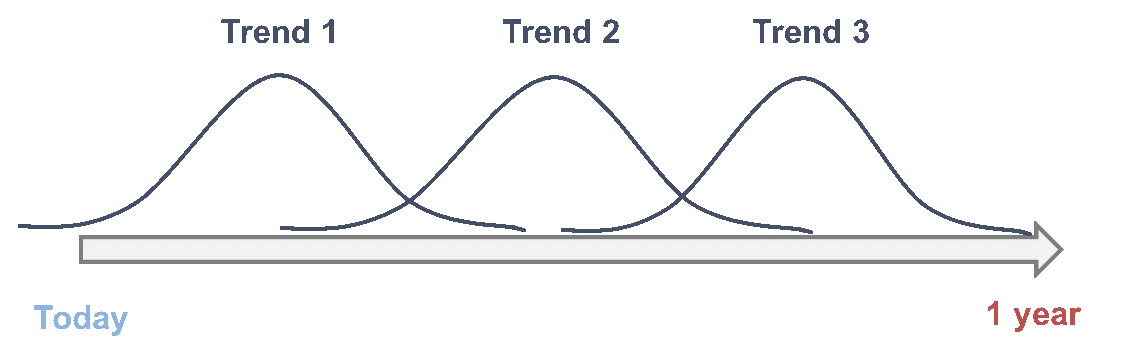
Knowing a trend's inception point allows organizations to accurately map its current lifecycle stage, project its longevity, and calculate its definitive ROI. In dynamic markets, multiple micro-trends frequently overlap. It is critical to strategically orchestrate product portfolios to maximize market share across these concurrent cycles.
Leveraging AI for Market Intelligence
Manual trend spotting is obsolete. Today, Artificial Intelligence can systematically scrape, aggregate, and analyze massive volumes of unstructured data across social media and key opinion leader (KOL) networks.
More importantly, AI algorithms programmatically score these insights based on confidence intervals. For enterprise retailers, this real-time, scored intelligence is mission-critical. It allows decision-makers to optimize product portfolios, accelerate go-to-market strategies, and dynamically adjust upstream supply chain operations to capture peak market demand at the earliest possible stage.
The future belongs to organizations that integrate live, on-trend market signals into their supply chain infrastructure, ensuring they remain in absolute synchronization with consumer demand.